10 storage unit organization tips from people who pack them for a living
Heavy boxes low, nothing on the concrete, an aisle you can walk, labels facing you. Then the harder part: knowing which of forty boxes has the thing you came for.
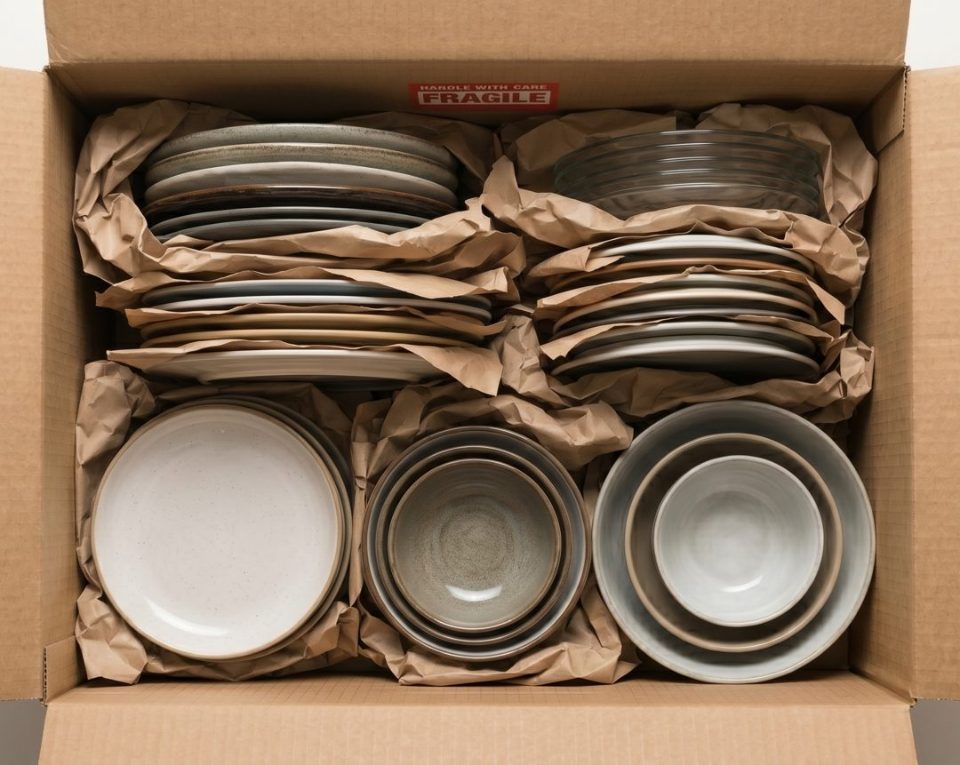
Most storage units get packed in one rushed afternoon, in whatever order things came off the truck. Six months later it's a wall of identical boxes, and checking for the camping stove means a forty-minute round trip. These tips cover packing and stacking, then finding things later. For the full inventory method, see how to inventory a storage unit.
Use two box sizes, and put the heavy stuff in the small one
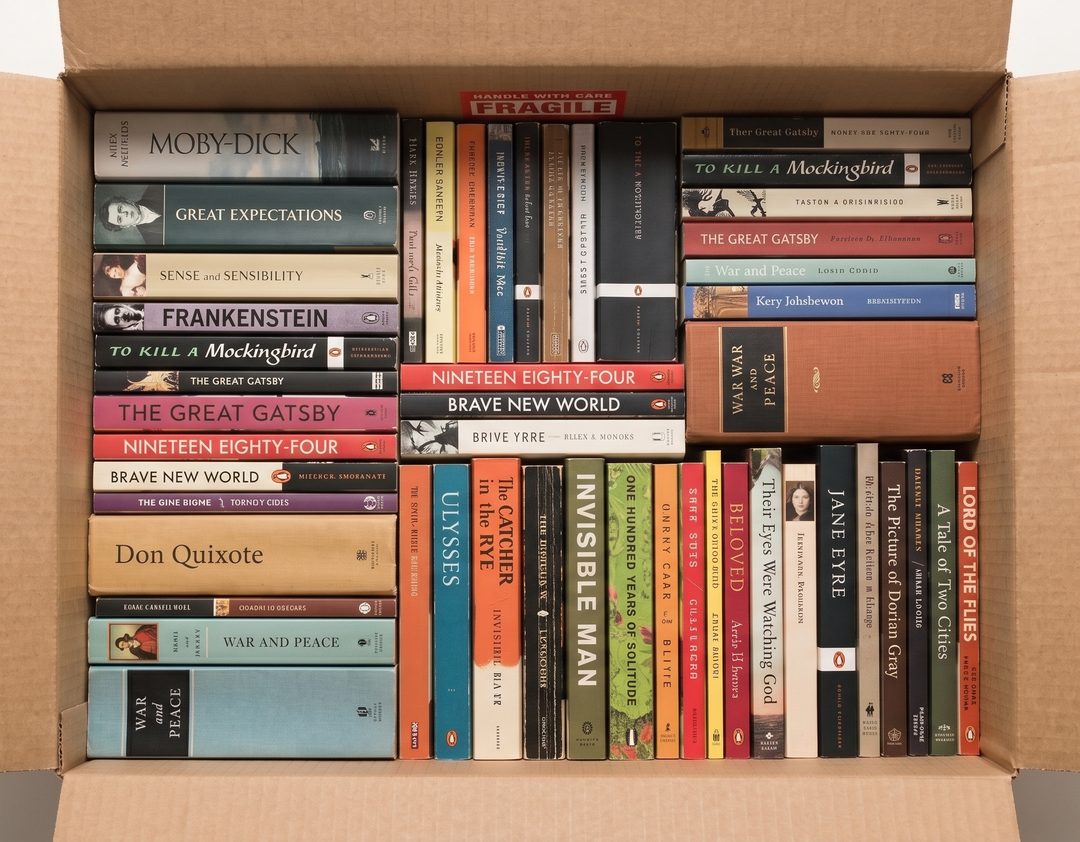
Same-size boxes stack into stable columns. Pick a small box (about 1.5 cubic feet) and a medium (3 cubic feet). Books, tools, dishes and cans go in the small ones so you can lift each one alone. Linens and pillows go in the medium. Tape the bottom seam and both edges, since a box that splits at the base takes the column with it.
Nothing touches the concrete or the walls
Concrete wicks moisture, and it's where any water shows up first. Put everything on pallets, plastic risers or 2×4s, and leave a hand's width between the stack and the wall for air. Put furniture legs on blocks and wrap upholstery in moving blankets, since plastic traps condensation.
Stack like bricks: heaviest at the base, labels toward the aisle
Put the heaviest, sturdiest boxes at the bottom and offset each layer like brickwork so every box rests on two below it. Stop at shoulder height, where you can still read labels and lift safely. Fill boxes to the top but not over: bulging lids won't take weight, and half-empty boxes crush. Turn every label toward the aisle.
Store the mattress flat, not on its side
Standing a mattress on edge to save space is common advice, but Sealy says to store it as flat as possible with little or nothing on top, in a breathable bag, and not vacuum-sealed. Months on its side let the fill settle and the springs or foam bow. If it only fits on edge, load it last, strap it upright to something solid, and lay it flat on your next visit.
Fill every gap, then label it
You're paying for the empty space too. Fill dresser drawers with clothes and the washer drum with towels. A clean, dry fridge can hold light non-food items with the door propped open against mildew. Things packed inside other things get forgotten, so label the outside (“drawers: winter clothes”) and photograph each drawer open.
Leave an aisle you can walk, and a front row you'll actually use
Keep a center aisle of 18 to 24 inches from the door to the back wall. Use the first four feet inside the door for what you're most likely to want: seasonal clothes, sports gear, files, the camping bin. Things you won't need until you move out go at the back.
Label two sides and the top, with a code, not a novel
Put the same label on two adjacent sides and the top so one faces out however the box gets turned. Use a short code (B-14) and a two-word name, big enough to read from the aisle. Contents lists written on the box go out of date, so keep those in a photo or a list you can edit from home.
Know the banned list, and drain the mower
Operators prohibit perishable food (it draws pests to the whole building), animals, plants and hazardous materials: gasoline, propane, kerosene, paint thinner, pool chemicals, fireworks and most aerosols. Drain the tank on gas-powered equipment and disconnect the battery if you can. Pet food, birdseed and candles all count as food to a mouse. Take the rental agreement's list seriously, because a violation can void the insurance they made you buy.
Decide on climate control by what you're storing, not by price
Climate-controlled units typically stay roughly between 55 and 80°F (CubeSmart quotes that range), and most operators don't promise anything about humidity. That matters for solid wood, leather, instruments, electronics, photos, documents, vinyl and anything glued, which can crack or warp with repeated swings. Tools, outdoor gear and totes of hard goods don't need it. If you pay for it, keep the sensitive things toward the middle, away from the door and outside wall.
Photograph every box open, then every wall closed
Don't tape a box shut until you've photographed it. A top-down photo of the open box, taken in daylight on the tailgate, gives you a contents list that stays accurate. Once the stacks are built, take one wide photo of each wall so you know which column a box is in. Do it all before the door comes down, since you usually have no signal inside a steel and concrete unit.
How StorageBuddy helps with your storage unit
- Search from the couch. “Is the crib in the unit?” gets
Unit 214 → Back wall → B-22, with the photo, before anyone gets in the car. - Works with no signal. Photograph, name, place and label the whole unit offline. Containers and photos save on your phone and sync when you drive out.
- Everyone with a key sees the same list. Share the space with a join code. Sharing is included on every plan.
- Labels stay put when boxes move. A box keeps its QR label and short code when it moves from the back wall to the front row. Only its location changes, and the move is dated.
Free to start: your first 10 containers per space with unlimited items, QR labels, sharing, offline capture and full export. Plus and Lifetime lift the container cap. Nothing you catalog ever expires.
Move-in day checklist
Print it, stick it on the bin, tick it off. One page.
- Use two box sizes; put heavy things in the small one
- Tape box bottoms and edges
- Put pallets or risers under everything; keep stacks off the walls
- Stack heavy boxes low in brick pattern, no higher than your shoulder
- Store the mattress flat in a breathable bag
- Cover furniture with blankets, not plastic
- Fill drawers and drums; label what's inside
- Keep an 18-inch center aisle; put likely-needed items up front
- Label two sides and the top with a code and name
- Leave out food, fuel, propane, solvents and pool chemicals; drain the mower
- Pick climate control based on what you're storing
- Photograph every box open and every wall before closing the door
- Share the space with everyone who has a key
From “10 storage unit organization tips from people who pack them for a living” · https://storagebuddy-ai.com/blog/storage-unit-organization-tips · StorageBuddy AI
Questions people ask
How do you organize a storage unit for easy access?
Keep a walkable center aisle, put the things you'll want in the first four feet, stack heavy boxes low with labels facing the aisle, and keep a photo inventory so you know which column to go to before you arrive.
Should boxes sit directly on the floor of a storage unit?
No. Put pallets, risers or 2×4s under everything and leave a gap between the stacks and the walls. Concrete wicks moisture, and the floor is where water shows up first.
Is it OK to store a mattress on its side?
Mattress makers say to store it flat in a breathable cover with nothing heavy on top, and never vacuum-sealed. Months on edge let the fill settle. If it has to stand, strap it upright and lay it flat when you can.
What can't you put in a storage unit?
Perishable food, plants, animals and hazardous materials such as gasoline, propane, kerosene, solvents, pool chemicals, fireworks and most aerosols. Drain fuel from mowers and other equipment. The list in your rental agreement is enforceable.
Do I need climate-controlled storage?
Yes, if you're storing solid wood, leather, instruments, electronics, photos, documents, vinyl or anything glued. Controlled units hold roughly 55 to 80°F. Plastic totes of hard goods and outdoor gear are fine in a standard unit.
Sources & further reading
- Sealy, How to store your mattress: store flat, don't vacuum-seal.
- Storage Rentals of America, Best ways to pack a storage unit efficiently: heaviest at the base, brick pattern, walking space.
- U-Haul, Hacks for maximizing your storage space: overfilled boxes rupture; blankets, not plastic, on furniture.
- Public Storage, 22 tips for packing and organizing your storage unit: pallets, label all sides, appliance doors ajar; and Do I need insurance?.
- SecureSpace, Storage rules and Keep your unit clear of pests: prohibited items; raise items off the ground.
- Storelocal, What not to store: the named hazardous-materials list.
- CubeSmart, Climate-controlled storage FAQ: 55 to 80°F; what benefits from it.
Keep reading
10 garage organization tips that still work in March
A few rules for the garage you already have. Zone by how often you reach for things, use one tote size, stay under the shelf rating, and photograph every bin so you never open six to find one.
10 attic storage tips (and what should never go up there)
An attic is the hottest, least-visited room in the house. Store only what can take 140°F, and keep a record good enough that you never have to climb up and check.
10 toy storage ideas that survive a birthday party
Put fewer toys out, rotate the rest from labelled totes, give each category one home a child can reach, and keep small parts away from the toddler.
Storage unit inventory: know what’s in the unit without driving there
Map the unit as locations, number every bin, photograph before you stack, share the list with whoever has a key.