10 pantry organization tips, with the food-safety facts most lists skip
A pantry is a tiny warehouse with a bad inventory system. Set up zones, rotate stock front to back, decant what pests can chew through, and learn what the label dates mean.
Pantry makeovers look great for about a month. A pantry takes deliveries every week and nobody checks them in, and matching jars don't change that. A few warehouse habits do. Below are those habits, plus what package dates mean, how long staples last, and how to keep moths out of the flour. The numbers come from the USDA, university extensions and the Academy of Nutrition and Dietetics.
Zone by meal moment, not by food type
“Grains together, cans together” sounds logical and turns breakfast into a search. Group by when you reach for things: a breakfast shelf (cereal, oats, coffee, jam), a weeknight-dinner shelf (pasta, rice, sauces, canned tomatoes, stock), a baking bin, and a snack basket at kid height. Put breakfast at eye level near the coffee maker. Baking can go higher if you only bake on weekends.
New behind old, every time you unpack groceries
First in, first out is standard in commercial kitchens, and Utah State University Extension recommends it for home pantries: newer items go behind, older ones come forward. Give each category a space two rows deep. If the new can won't fit behind the old one, you bought more than that zone holds.
Decant what pests chew through and leave the rest in its packaging
Flour, cereal, rice, pasta, oats, dried beans and birdseed come in paper or thin cardboard that pantry-moth larvae can get through. University extension services recommend glass, metal or heavy plastic containers with tight lids for these. Cans, jars, bottles and sealed foil pouches gain nothing from a new container. When you decant, cut the cooking instructions and date off the package and drop them in the jar, or write the date on tape on the lid.
Learn what the dates actually mean
Food dates are mostly about quality. The USDA Food Safety and Inspection Service says a “Best if Used By/Before” date “is not a purchase or safety date,” and a “Use-By” date “is not a safety date except for when used on infant formula.” Otherwise, FSIS says properly handled food should stay safe and wholesome until spoilage is evident. Unopened pasta a month past its date might taste a bit flat, and that's all. Watch instead for bulging, rusted, leaking or deeply dented cans, off smells, and pests.
Keep the pantry cool: below 85°F always, 50 to 70°F ideally
USDA FSIS advises keeping canned and shelf-stable food somewhere cool and dry: not above or beside the stove, under the sink, or in a damp garage or basement. Below 85°F is best, and over 100°F harms canned goods. The Academy of Nutrition and Dietetics puts the ideal at 50 to 70°F.
| Canned goods (unopened) | Keep for best quality |
|---|---|
| High-acid: tomatoes, fruit, juices, pickles, sauerkraut, vinegar-based foods | 12 to 18 months |
| Low-acid: meat, poultry, fish, most vegetables, soups (not tomato), beans, stews | 2 to 5 years |
Source: USDA FSIS, Shelf-Stable Food Safety.
Fix deep shelves with a front row and a back row
Deep shelves bury things. Treat each one as two rows: working stock in front, backstock of the same products behind. Turntables handle corners, risers lift the back row of cans into view, and clear pull-out bins turn a 20-inch shelf into a drawer. If a shelf is deeper than your arm, use a bin you can slide out.
Stop pantry moths with a freezer and a smaller bag
Indian meal moths usually come home inside a package, often birdseed, pet food or bulk grain. Extension services advise buying dried foods in amounts you'll use within two to four months, checking packages for damage, and storing them in tightly closed glass, metal or heavy plastic. Freezing grain products for three to four days after purchase kills eggs and larvae. If you find webbing, empty the shelf and vacuum the corners and shelf-pin holes. Don't spray insecticide near food. It doesn't work on pantry pests anyway.
Know how long staples last at room temperature
Kansas State Research and Extension publishes shelf-life figures for a 70°F cupboard. Some common ones:
| Staple | Keep for best quality at 70°F |
|---|---|
| White or whole-wheat flour | 6 to 8 months (whole grain is best refrigerated) |
| White rice | 1 to 2 years |
| Brown rice | 1 year |
| Dried pasta | 1 to 2 years |
| Dried beans and peas | 12 months |
| Ground spices | 2 to 3 years (whole spices 3 to 4) |
| Breakfast cereal | 6 to 12 months unopened, 2 to 3 months opened |
| Vegetable oil | 6 months unopened |
Whole grains and anything oily (whole-wheat flour, brown rice, nuts) go stale within months. Refined grains and spices last years. Buy the first group in small amounts.
Use the door, the walls and the floor, in that order
In a small pantry the shelves are only part of the space. An over-the-door rack holds spices, packets and foil at eye level. Narrow rails on the side walls take lids and bag clips. The floor can hold two or three heavy sealed bins (dog food, rice, a case of sparkling water) that would bow a shelf. Set them on a tray so you can wipe underneath. Oils, vinegars and syrups go on a tray too, on a middle shelf and never above dry goods.
Reset for fifteen minutes each quarter, and photograph the backstock
Four times a year, pull the front row forward, move anything near its date to a “use this week” basket, wipe the shelves and check the corners for moths. Then photograph the shelves and overflow bins, so you can check for brown sugar from the store aisle.
How StorageBuddy helps with your pantry
- Searchable backstock. Overflow bins in the basement, garage or hall closet get a photo, an item list and a location.
- Ask from the store. “Do we have canned tomatoes?” returns the bin, shelf and photo before you buy another case.
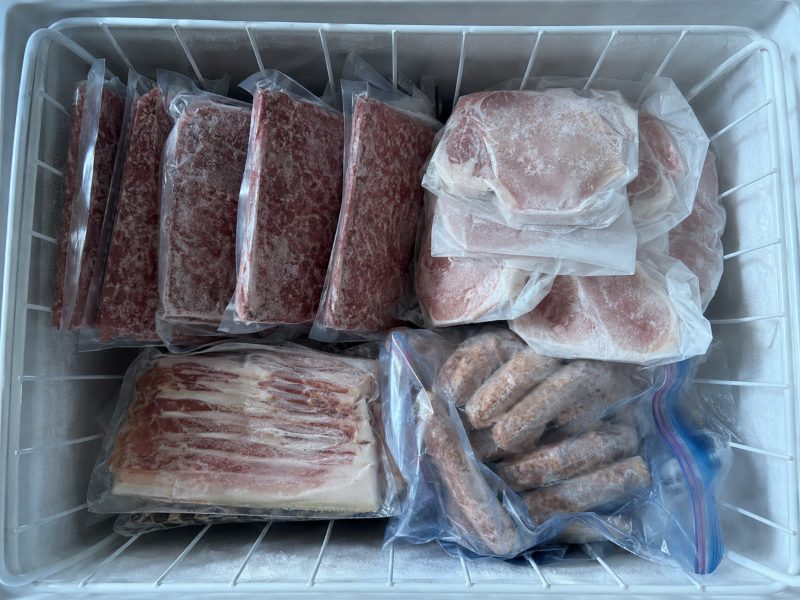
- Freezer baskets too. Snap a basket as you restock it. The AI lists what it sees and you confirm.
- Shared with whoever cooks. Everyone in the household sees the same bins and can mark an item as running low.
Free to start: your first 10 containers per space with unlimited items, QR labels, sharing, offline capture and full export. Plus and Lifetime lift the container cap. Nothing you catalog ever expires.
The pantry reset checklist
Print it, stick it on the bin, tick it off. One page.
- Zone shelves by meal: breakfast, dinner, baking, snacks, lunches
- Put new stock behind old
- Decant flour, grains, cereal, beans, birdseed and pet food into sealed containers
- Tape the date and instructions to each decanted container
- Keep food away from the stove, the sink and the garage
- Toss bulging, rusted, leaking or deeply dented cans
- Split deep shelves into a front row and a back row
- Freeze grain products for three to four days after buying
- Buy whole-grain flour, brown rice, nuts and oils in small amounts
- Reset quarterly and photograph the overflow bins
From “10 pantry organization tips, with the food-safety facts most lists skip” · https://storagebuddy-ai.com/blog/pantry-organization-tips · StorageBuddy AI
Questions people ask
How often should you clean out your pantry?
Do a fifteen-minute reset every quarter. The USDA also suggests looking over canned goods every few weeks for damage.
Is food safe to eat after the Best if Used By date?
Usually. The USDA says those dates describe peak quality, not safety, except on infant formula. Throw out any can that is bulging, rusted, leaking or deeply dented, whatever the date.
Should you decant pantry food into containers?
Decant what pests can chew into (flour, cereal, oats, rice, pasta, dried beans, birdseed, pet food) into glass, metal or heavy plastic with tight lids. Cans, jars and sealed pouches don't need it.
How do I keep pantry moths out?
Buy dry goods in small amounts, inspect packages, freeze grain products for three to four days after purchase, and store them sealed. Birdseed and pet food are the usual source.
How do you organize deep pantry shelves?
Working stock in front, backstock of the same item behind. Add risers for cans, turntables for corners, and pull-out bins for anything past arm's reach.
Sources & further reading
- USDA Food Safety and Inspection Service, Food product dating: what Best if Used By, Use By and Sell By mean.
- USDA FSIS, Shelf-stable food safety: storage temperatures and canned-good shelf life (also archived at govinfo.gov).
- Academy of Nutrition and Dietetics, Food storage safety tips for the cupboard: 50 to 70°F.
- Kansas State Research and Extension, Safe food storage: the cupboard (MF3131): staple shelf-life table.
- University of Minnesota Extension, Pantry pests: purchase quantities, containers, freezing and heating.
- Clemson Cooperative Extension HGIC, Indian meal moth: freeze grain products for three days after purchase.
- Utah State University Extension, Food waste part 5: FIFO.
- USDA and FoodSafety.gov, FoodKeeper app: storage times for 400+ foods.
Keep reading
10 garage organization tips that still work in March
A few rules for the garage you already have. Zone by how often you reach for things, use one tote size, stay under the shelf rating, and photograph every bin so you never open six to find one.
10 closet organization tips, including what to do with the off-season half
Half of what's in a closet is waiting for the weather to change. Organize the half you wear by reach, store the rest clean and sealed, and keep track of which bin the parka went into.
10 attic storage tips (and what should never go up there)
An attic is the hottest, least-visited room in the house. Store only what can take 140°F, and keep a record good enough that you never have to climb up and check.