10 camping gear storage ideas so the next trip packs itself
Organize camping gear the week you get home, while you still know what ran out. Build kits by trip type, store soft goods loose, and use a photo of each tote as next summer's packing list.
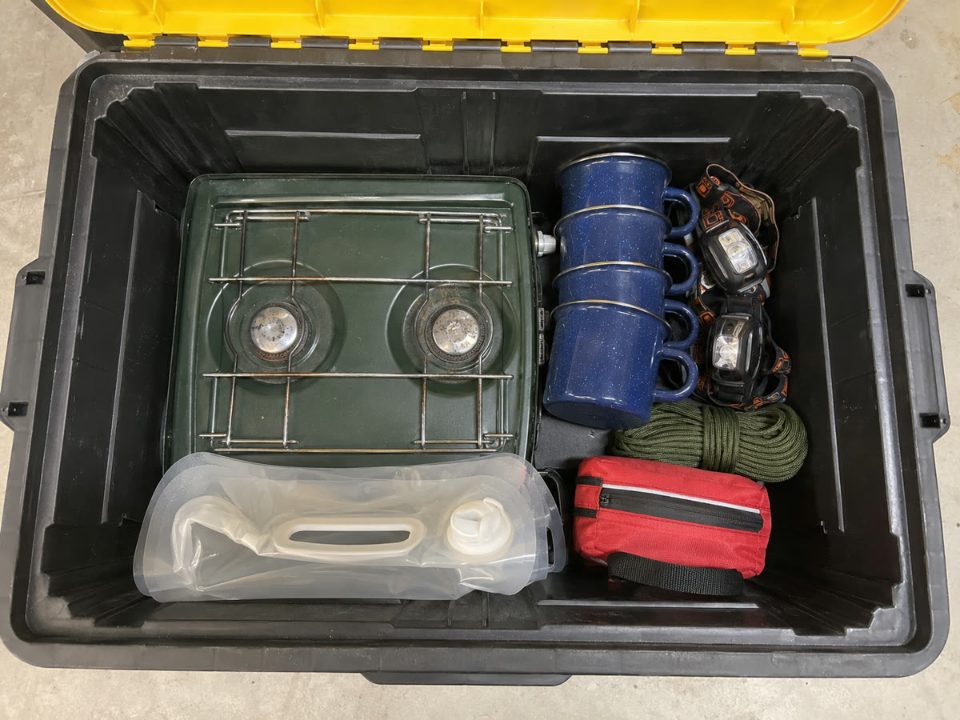
Camping gear comes home damp, goes on a shelf in the wrong bags, and next season the trip starts with two hours on the garage floor and a run for the fuel canister that was empty all along. Organize right after the trip, while you remember what broke and ran out, and store gear as kits. The tips run in roughly the order you'd do them that week.
Unpack within 48 hours and dry everything completely
If the tent goes away damp, nothing else here matters much. Pitch it in the yard or drape it over chairs until the floor, fly and stuff sack are completely dry. Do the same with sleeping bags, pads, tarps and the kitchen towel. Mildew starts within days and permanently damages waterproof coatings. While things dry, shake the sand out of the tent, wipe the stove, and empty the cooler and leave it open.
Store sleeping bags, pads and down loose, not in their stuff sacks
Months of compression crush the loft that keeps a bag warm. Down makers such as Feathered Friends recommend storing bags in a large breathable cotton or mesh sack, or hanging them in a ventilated closet. Synthetic fill needs the same treatment. Store self-inflating pads flat or loosely rolled with the valve open. Clip the trail stuff sacks to the storage sack so they're together when you pack.
Build kits by trip type, one tote per kit
Store complete kits instead of “all the stoves” and “all the lights.” For example: a car-camping kitchen tote (stove, fuel adapter, pot set, utensils, cutting board, dish kit, lighter), a sleep tote (pads, pillows, bags in their own loose sack), a backpacking bin (small stove, filter, ultralight tent), and a day-hike basket by the door. Packing then means grabbing three totes. Shared items like the first-aid kit go in whichever kit always travels.
Take the fuel and the batteries out
Keep propane and isobutane canisters out of sealed totes in a hot garage or attic. Store them upright in a cool, ventilated spot away from the water heater, never in the house. Under NFPA 58, the national propane code, grill-size cylinders stay outside buildings entirely. Pull the batteries from headlamps, lanterns and GPS units too, since battery makers warn idle alkaline cells can leak and corrode contacts. Bag them and tape the bag inside the tote lid.
Empty every food container and clean the cooler
Crumbs in the pot set, half a bag of trail mix and a sticky lighter are enough to bring in mice. Empty all food, wash and dry everything, and store the cooler with the lid open or cracked so it doesn't mildew. Wash bear canisters and store them open. If you keep a camp pantry of dry goods between trips, keep it in a sealed bin indoors.
Tape a restock list inside the lid
While the trip is fresh, write down what ran out or broke: fuel, matches, biodegradable soap, a bent tent stake, first-aid supplies. Date the list, tape it inside the lid of the kit it belongs to, and shop from it before the next trip.
Choose totes by what you'll carry, and keep the weight in the middle band
Heavy totes go between knee and shoulder. Nobody should lift 27 gallons of cast iron down from overhead, but sleeping pads can live up there. Use one tote size so they stack. Label the short side, which faces out, with a code and kit name you can read from the car.
Hang the awkward stuff
Chairs, folding tables, tent poles, fishing rods, paddles and kayaks hang better than they stack. Use hooks in the studs for chairs and poles, a ceiling hoist or wall cradle for boats, and a rail for rods. The ceiling over the garage door suits the big family tent and other twice-a-year gear.
Make the photo the packing list
A downloaded checklist includes things you don't own and misses things you do. Photos of your own totes, taken at the end of last season, show what's in each kit, and the restock list in the lid shows what's missing. Look through them the night before and add anything new.
Do a ten-minute audit before the gear goes away for winter
After the last trip of the season, look for anything that leaked, broke or never left the tote all summer. Repair the pole, re-waterproof the fly, replace the cracked water jug, and put unused items in the donate box. Then photograph each tote one more time before it goes on the shelf, so next spring starts with a known inventory.
How StorageBuddy helps with your camping gear
- Kits you can see from the couch. Each tote has a photo and an AI-drafted item list. “Where's the camp stove?” gets the tote and shelf.
- Pre-trip check in one search. Everything tagged
campingin one list, grouped by location. - Labels that last a season outside. QR labels print on Avery sheets or a thermal label printer, and anyone can scan one with a phone camera.
- The record moves with the tote. Lend the kitchen kit to a friend or take it to the cabin and re-home it in two taps. The move is logged with a date.
Free to start: your first 10 containers per space with unlimited items, QR labels, sharing, offline capture and full export. Plus and Lifetime lift the container cap. Nothing you catalog ever expires.
End-of-season gear checklist
Print it, stick it on the bin, tick it off. One page.
- Dry the tent, fly, bags, pads, tarps and towels within 48 hours
- Store sleeping bags and pads loose
- Build one tote per kit: kitchen, sleep, backpacking, day-hike
- Keep fuel canisters upright in a cool, ventilated spot
- Pull batteries and bag them in the lid
- Empty all food, wash the pots, store the cooler open
- Tape a dated restock list inside each lid
- Keep heavy kits between knee and shoulder, codes on the short side
- Hang chairs, poles, rods, paddles and boats
- Photograph every open tote
- Audit at season's end: repair, replace, donate, re-photograph
From “10 camping gear storage ideas so the next trip packs itself” · https://storagebuddy-ai.com/blog/camping-gear-storage · StorageBuddy AI
Questions people ask
How should I store a sleeping bag long term?
Completely dry, loose in a large breathable cotton or mesh sack, or hung in a ventilated closet. Down and synthetic fills both lose loft if left compressed for months.
Can you store camping gear in the garage?
Most of it: tents, pads, kitchen kits, chairs and coolers in sealed totes off the floor. Keep sleeping bags somewhere drier if the garage is damp, store fuel upright away from heat, and keep food out.
How do you store a tent so it doesn't get mildew?
Dry it completely, shake out the sand, and store it loosely rolled or in a large breathable bag, off concrete and out of direct sun.
What's the best way to organize camping gear?
As complete kits by trip type, one tote each, with a photo of each open tote and a restock list inside the lid.
Should I take batteries out of headlamps and lanterns before storing?
Yes. Battery makers advise removing them from devices that won't be used for a long time, because leaking cells corrode contacts.
Sources & further reading
- Feathered Friends, Down care guide: store down loose in a breathable sack; avoid long compression.
- Energizer, Battery care: remove batteries from devices not used for extended periods.
- NFPA, NFPA 58: Liquefied Petroleum Gas Code.
- Minnesota State Fire Marshal, LP-gas inside buildings: propane cylinder limits inside buildings and garages.
- U.S. Consumer Product Safety Commission, Anchor It!: anchor shelving and racks to the wall.
Keep reading
10 garage organization tips that still work in March
A few rules for the garage you already have. Zone by how often you reach for things, use one tote size, stay under the shelf rating, and photograph every bin so you never open six to find one.
10 attic storage tips (and what should never go up there)
An attic is the hottest, least-visited room in the house. Store only what can take 140°F, and keep a record good enough that you never have to climb up and check.
10 storage unit organization tips from people who pack them for a living
Heavy boxes low, nothing on the concrete, an aisle you can walk, labels facing you. Then the harder part: knowing which of forty boxes has the thing you came for.
The garage organization system that actually sticks
Zones, vertical storage, numbered totes, seasonal rotation and the photograph-before-you-shelve habit.